TRAINING PEOPLE ENJOY
Serious Training.
Built to Play.
Improve learner outcomes and engagement with game-based training for web or mixed reality.
Improve engagement and learning with game-based training for web or mixed reality.


Trusted by leading institutions


Trusted by leading institutions
Trusted by leading institutions
Trusted by leading institutions

One experience
for Web or XR.
One experience
for Web and XR.
• Immersive learning on Meta Quest 3
• Browser access with no headset required
• Available wherever your team is connected
• Browser access with no headset required
• Available wherever your team is connected

Workforce Readiness

Call Center Operations

Health & Safety
Emergency Responce
THE STORY
Over the years, we have tested the boundaries of what is possible with mixed reality, refined our approach, and uncovered what matters most to our customers.

Facility Familiarization
We began by helping staff and responding agencies build familiarity with facilities before exercises or real events. Digital replicas gave teams repeatable access to layouts, routes and landmarks while physical sites continued serving their communities and everyday operational priorities.
A US public library used its replica for facility onboarding. In other use cases, Police could review evacuation routes of school facilities to support planning. These projects established how recognizable places could become training settings for more complex operational scenarios.
Scenario-based Training
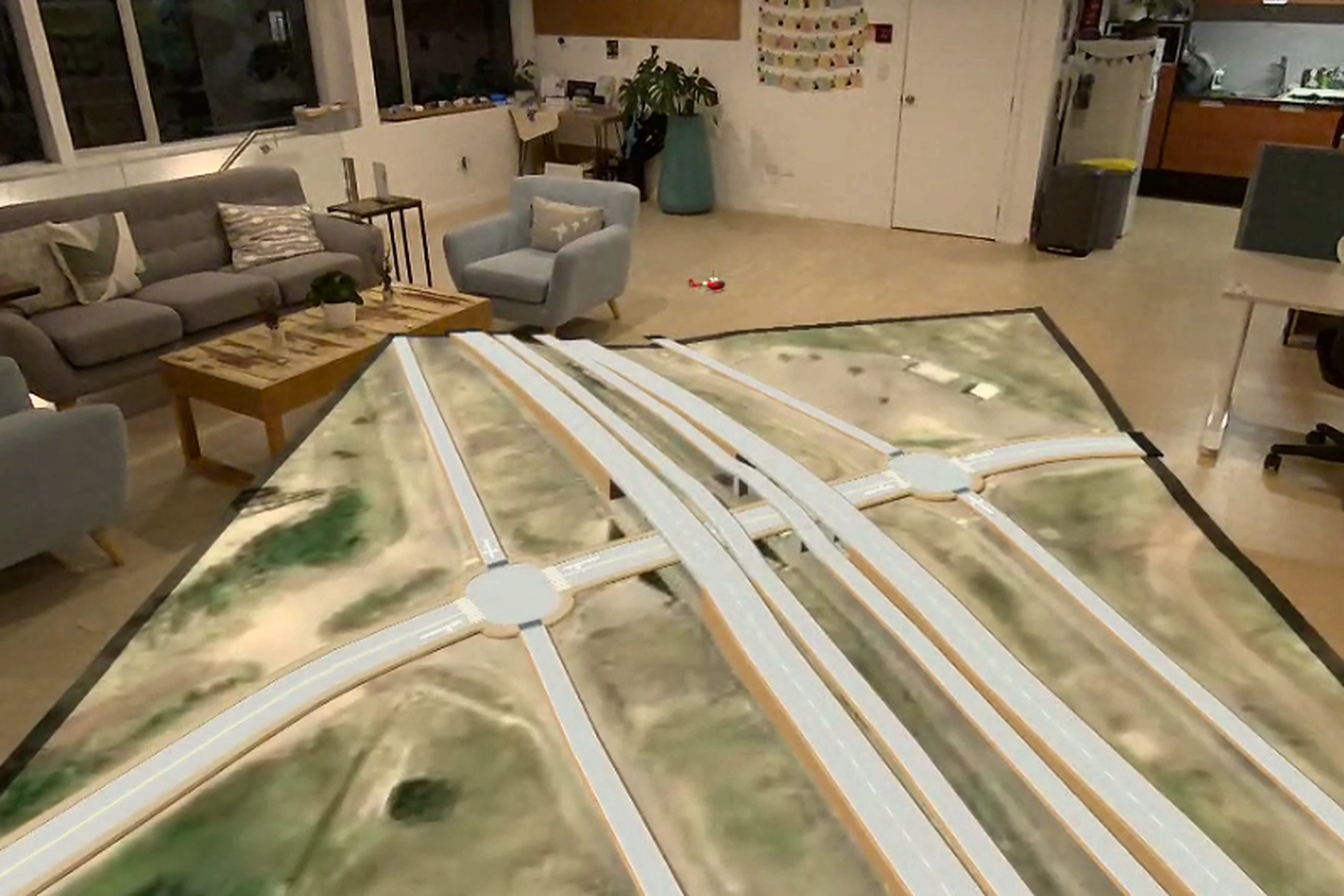
Building on this concept, we created training scenarios within new environments, including different types of terrain, roads and highways, and larger facilities such as zoos and universities. This would allow learners to visualize emergencies while training in the context of real-world locations.
Feedback from a US state police customer showed that 70% of 911 operators found the format more engaging than classroom or slide-based training, while 40% said it increased their appreciation for the work their troopers do out in the field.

Interactive Simulations
The next series of modules offered learners a closer, more engaging experience of environments as complex simulated events unfolded. Examples included a ladder falling onto power lines, a small office fire and a search-and-rescue helicopter carrying out an extraction in the wilderness.
Learners could also interact with the scene itself, inspect important objects and recognize hazards. This connected close observation with the decisions and actions expected during a realistic, complex workplace simulation.

Adoption & Accessibility
Today, one application delivers the same training through the web or mixed reality. Learners begin with a tabletop overview, then enter the environment at full scale to inspect and use objects themselves, connecting the whole situation with practical, hands-on experience.
Organizations can choose the training format that suits their learners, facilities and resources while keeping the training experience consistent. This flexibility supports participation, simpler adoption and repeatable practice, completing the progression from learning a place to acting confidently within it.
THE STORY
Over the years, we have tested the boundaries of what is possible with mixed reality, refined our approach, and uncovered what matters most to our customers.
Facility Familiarization
We began by helping staff and responding agencies build familiarity with facilities before exercises or real events. Digital replicas gave teams repeatable access to layouts, routes and landmarks while physical sites continued serving their communities and everyday operational priorities.
A US public library used its replica for facility onboarding. In other use cases, Police could review evacuation routes of school facilities to support planning. These projects established how recognizable places could become training settings for more complex operational scenarios.
Scenario-based Training
Building on this concept, we created training scenarios within new environments, including different types of terrain, roads and highways, and larger facilities such as zoos and universities. This would allow learners to visualize emergencies while training in the context of real-world locations.
Feedback from a US state police customer showed that 70% of 911 operators found the format more engaging than classroom or slide-based training, while 40% said it increased their appreciation for the work their troopers do out in the field.
Interactive Simulations
The next series of modules offered learners a closer, more engaging experience of environments as complex simulated events unfolded. Examples included a ladder falling onto power lines, a small office fire and a search-and-rescue helicopter carrying out an extraction in the wilderness.
Learners could also interact with the scene itself, inspect important objects and recognize hazards. This connected close observation with the decisions and actions expected during a realistic, complex workplace simulation.
Adoption & Accessibility
Today, one application delivers the same training through the web or mixed reality. Learners begin with a tabletop overview, then enter the environment at full scale to inspect and use objects themselves, connecting the whole situation with practical, hands-on experience.
Organizations can choose the training format that suits their learners, facilities and resources while keeping the training experience consistent. This flexibility supports participation, simpler adoption and repeatable practice, completing the progression from learning a place to acting confidently within it.
THE STORY
Over the years, we have tested the boundaries of what is possible with mixed reality, refined our approach, and uncovered what matters most to our customers.
Facility Familiarization
We began by helping staff and responding agencies build familiarity with facilities before exercises or real events. Digital replicas gave teams repeatable access to layouts, routes and landmarks while physical sites continued serving their communities and everyday operational priorities.
A US public library used its replica for facility onboarding. In other use cases, Police could review evacuation routes of school facilities to support planning. These projects established how recognizable places could become training settings for more complex operational scenarios.
Scenario-based Training
Building on this concept, we created training scenarios within new environments, including different types of terrain, roads and highways, and larger facilities such as zoos and universities. This would allow learners to visualize emergencies while training in the context of real-world locations.
Feedback from a US state police customer showed that 70% of 911 operators found the format more engaging than classroom or slide-based training, while 40% said it increased their appreciation for the work their troopers do out in the field.
Interactive Simulations
The next series of modules offered learners a closer, more engaging experience of environments as complex simulated events unfolded. Examples included a ladder falling onto power lines, a small office fire and a search-and-rescue helicopter carrying out an extraction in the wilderness.
Learners could also interact with the scene itself, inspect important objects and recognize hazards. This connected close observation with the decisions and actions expected during a realistic, complex workplace simulation.
Adoption & Accessibility
Today, one application delivers the same training through the web or mixed reality. Learners begin with a tabletop overview, then enter the environment at full scale to inspect and use objects themselves, connecting the whole situation with practical, hands-on experience.
Organizations can choose the training format that suits their learners, facilities and resources while keeping the training experience consistent. This flexibility supports participation, simpler adoption and repeatable practice, completing the progression from learning a place to acting confidently within it.
THE STORY
Over the years, we have tested the boundaries of what is possible with mixed reality, refined our approach, and uncovered what matters most to our customers.
Facility Familiarization
We began by helping staff and responding agencies build familiarity with facilities before exercises or real events. Digital replicas gave teams repeatable access to layouts, routes and landmarks while physical sites continued serving their communities and everyday operational priorities.
A US public library used its replica for facility onboarding. In other use cases, Police could review evacuation routes of school facilities to support planning. These projects established how recognizable places could become training settings for more complex operational scenarios.
Scenario-based Training
Building on this concept, we created training scenarios within new environments, including different types of terrain, roads and highways, and larger facilities such as zoos and universities. This would allow learners to visualize emergencies while training in the context of real-world locations.
Feedback from a US state police customer showed that 70% of 911 operators found the format more engaging than classroom or slide-based training, while 40% said it increased their appreciation for the work their troopers do out in the field.
Interactive Simulations
The next series of modules offered learners a closer, more engaging experience of environments as complex simulated events unfolded. Examples included a ladder falling onto power lines, a small office fire and a search-and-rescue helicopter carrying out an extraction in the wilderness.
Learners could also interact with the scene itself, inspect important objects and recognize hazards. This connected close observation with the decisions and actions expected during a realistic, complex workplace simulation.
Adoption & Accessibility
Today, one application delivers the same training through the web or mixed reality. Learners begin with a tabletop overview, then enter the environment at full scale to inspect and use objects themselves, connecting the whole situation with practical, hands-on experience.
Organizations can choose the training format that suits their learners, facilities and resources while keeping the training experience consistent. This flexibility supports participation, simpler adoption and repeatable practice, completing the progression from learning a place to acting confidently within it.
LATEST ARTICLES
LATEST ARTICLES


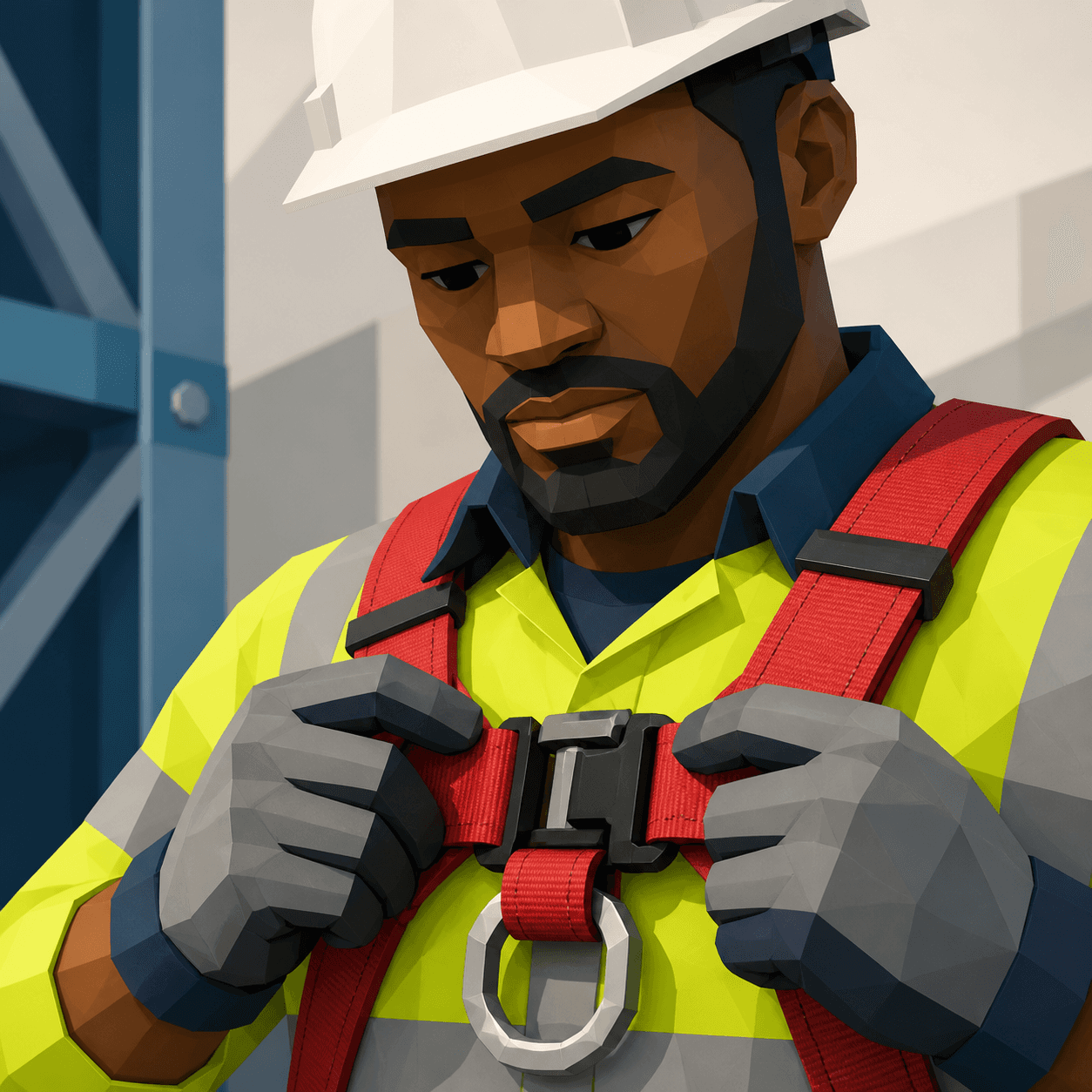
Train for the moments that matter
Game-based and immersive training can strengthen knowledge, confidence and readiness before teams face real-world consequences.






20% higher confidence
Simulation-game trainees reported higher post-training self-efficacy than comparison groups across a 65-study analysis.
0.59 behaviour advantage
XR outperformed traditional construction-safety training on measured safety behaviour after publication-bias adjustment.
14% stronger task knowledge
Simulation-game trainees achieved higher procedural-knowledge scores than comparison groups across the same analysis.
0.43 skills advantage
XR outperformed traditional construction-safety training on measured operational skills after publication-bias adjustment.
9% better retention
Simulation-game trainees retained more knowledge than comparison groups across the same analysis.
0.64 learning advantage
Across 13 comparisons, XR safety training produced stronger knowledge acquisition than traditional methods.
Train for the moments that matter
Game-based and immersive training can strengthen knowledge, confidence and readiness before teams face real-world consequences.
20% higher confidence
Simulation-game trainees reported higher post-training self-efficacy than comparison groups across a 65-study analysis.
0.59 behaviour advantage
XR outperformed traditional construction-safety training on measured safety behaviour after publication-bias adjustment.
14% stronger task knowledge
Simulation-game trainees achieved higher procedural-knowledge scores than comparison groups across the same analysis.
0.43 skills advantage
XR outperformed traditional construction-safety training on measured operational skills after publication-bias adjustment.
9% better retention
Simulation-game trainees retained more knowledge than comparison groups across the same analysis.
0.64 learning advantage
Across 13 comparisons, XR safety training produced stronger knowledge acquisition than traditional methods.
Train for the moments that matter
Game-based and immersive training can strengthen knowledge, confidence and readiness before teams face real-world consequences.
20% higher confidence
Simulation-game trainees reported higher post-training self-efficacy than comparison groups across a 65-study analysis.
0.59 behaviour advantage
XR outperformed traditional construction-safety training on measured safety behaviour after publication-bias adjustment.
14% stronger task knowledge
Simulation-game trainees achieved higher procedural-knowledge scores than comparison groups across the same analysis.
0.43 skills advantage
XR outperformed traditional construction-safety training on measured operational skills after publication-bias adjustment.
9% better retention
Simulation-game trainees retained more knowledge than comparison groups across the same analysis.
0.64 learning advantage
Across 13 comparisons, XR safety training produced stronger knowledge acquisition than traditional methods.
Train for the moments that matter
Game-based and immersive training can strengthen knowledge, confidence and readiness before teams face real-world consequences.
20% higher confidence
Simulation-game trainees reported higher post-training self-efficacy than comparison groups across a 65-study analysis.
0.59 behaviour advantage
XR outperformed traditional construction-safety training on measured safety behaviour after publication-bias adjustment.
14% stronger task knowledge
Simulation-game trainees achieved higher procedural-knowledge scores than comparison groups across the same analysis.
0.43 skills advantage
XR outperformed traditional construction-safety training on measured operational skills after publication-bias adjustment.
9% better retention
Simulation-game trainees retained more knowledge than comparison groups across the same analysis.
0.64 learning advantage
Across 13 comparisons, XR safety training produced stronger knowledge acquisition than traditional methods.
